
Somalia is a State Party to the Agreement establishing the African Continental Free Trade Area. This note sets out where the country stands, what is already in place, what is still being done and by whom, so that the file can be reported accurately. It supersedes the edition of 20 August 2026 in full.
In one paragraph
Somalia signed the Agreement at Kigali on 21 March 2018, the day it was adopted, completed the constitutional and legal procedures required for ratification, and on 4 September 2026 deposited its instrument of ratification with the Chairperson of the African Union Commission at the headquarters of the African Union in Addis Ababa. Somalia is the fiftieth State Party. As a Partner State of the East African Community, the country is already covered by the Community’s consolidated schedule of tariff concessions for the ninety per cent category; the remaining concessions and the commitments on trade in services are being finalised within the Community. A national implementation strategy was validated in Mogadishu in November 2023 and a national implementation committee is in place. What now determines when Somali goods actually move under the Agreement is operational: the transposition of the electronic tariff book and its configuration by customs.
Where Somalia stands
Somalia is a signatory of the first hour: the Agreement was adopted at Kigali on 21 March 2018 and signed on behalf of the Federal Republic of Somalia on the same day. Ratification then proceeds in two stages, and both are now complete. The national stage ran from parliamentary approval, through the assent of the President of the Federal Republic of Somalia, to the signature of the instrument at Mogadishu on 29 August 2026 by the Minister of Foreign Affairs and International Cooperation. The international stage, the deposit of that instrument with the Chairperson of the African Union Commission, was concluded on 4 September 2026. The deposit is the act that confers State Party status under the Agreement, and the correct formulation from that date is that Somalia is a State Party.
What is already in place
Somalia became a Partner State of the East African Community in March 2024. The Community has submitted a consolidated provisional schedule of tariff concessions covering the ninety per cent category, which means Somalia does not have to construct a tariff offer from nothing.
At national level, a strategy for implementing the Agreement was validated in Mogadishu in November 2023, and a national implementation committee is in place, with the trade union organisations represented among its members.
What is being done, and where
Two steps sit at national level. The AfCFTA electronic tariff book is brought into the national system, and the customs administration then configures the applicable preferential tariffs, so that a preference claimed at the border is a preference actually granted. These two steps, rather than the deposit, determine the date of Somalia’s first preferential consignment.
Two steps sit within the East African Community. The tariff concessions remaining beyond the ninety per cent category, covering the sensitive and excluded lines, require consensus among the Partner States before submission. So do the commitments on trade in services. This work is conducted inside the Community; it is not a matter pending between Somalia and the AfCFTA Secretariat.
What Somalia trades, and what it is positioned to trade
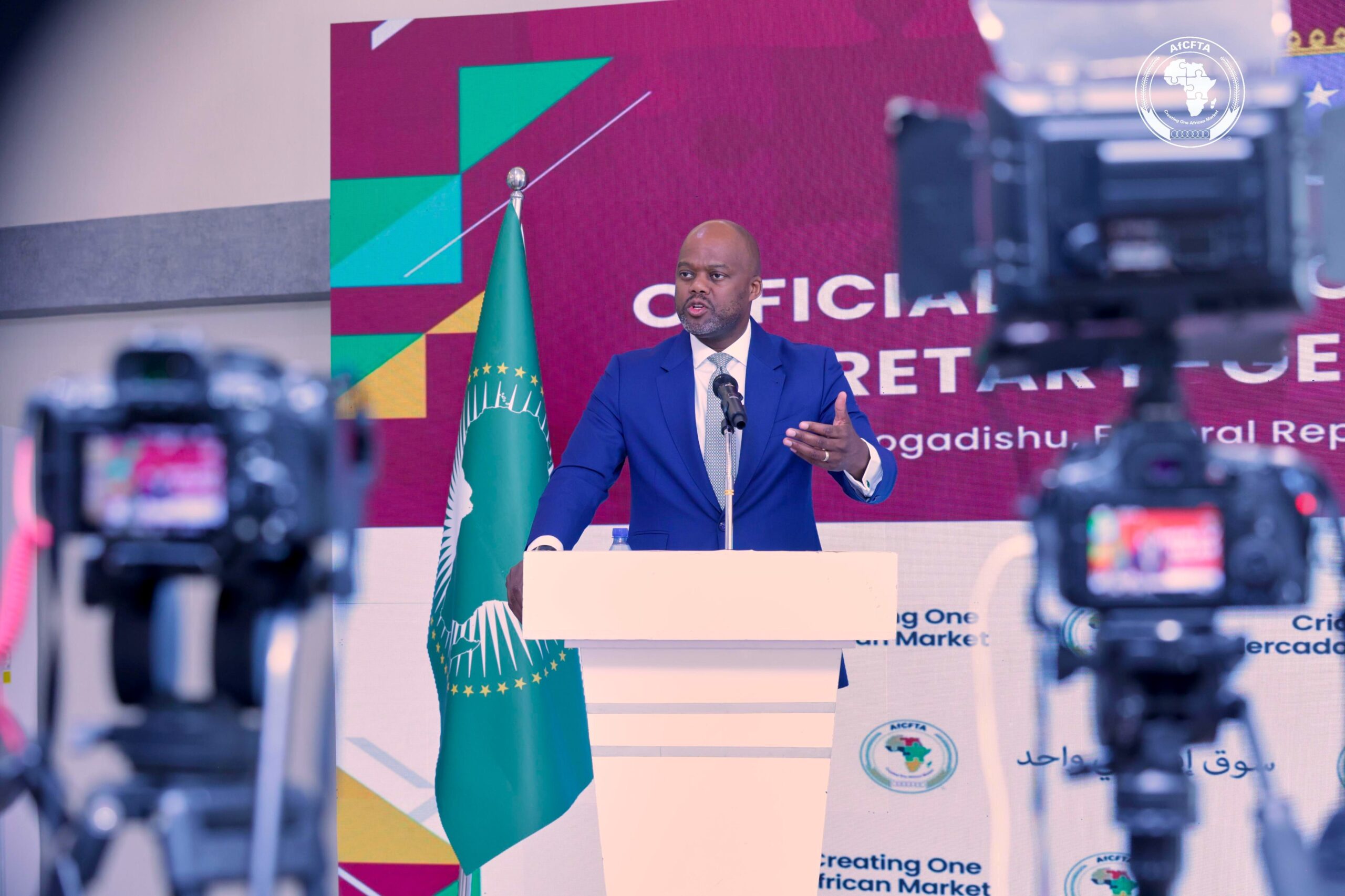
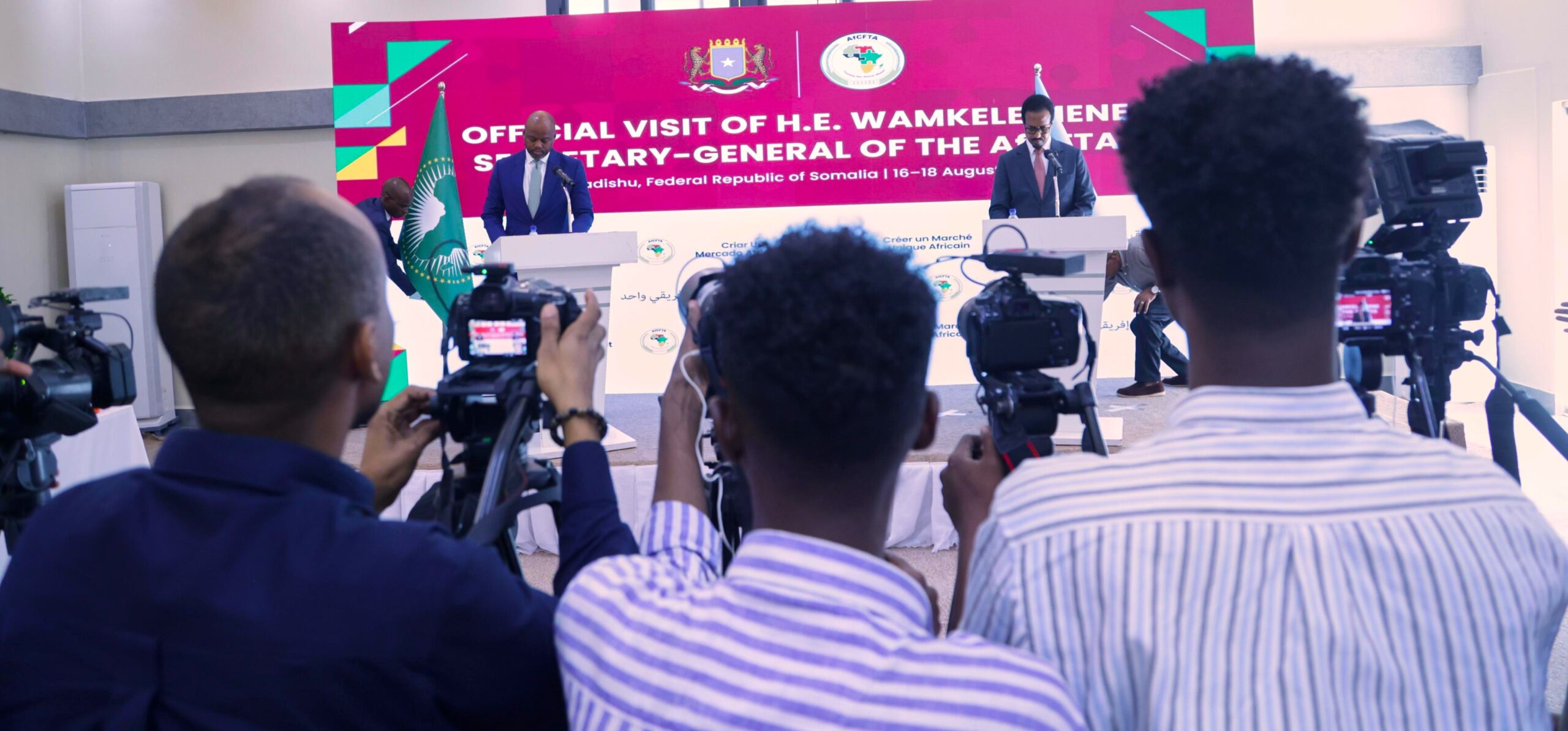
Somalia’s established exports are live animals, principally camels, sheep and goats, sold largely to the Gulf Cooperation Council countries, together with sesame and oilseeds. Fish and crustaceans are an emerging category, and gums, resins, hides and skins are premium niches. The sectors identified as positioned for growth under the Agreement are livestock, fisheries, agriculture, logistics, telecommunications and financial services.
The recurring recommendation made to Somali enterprises during the visit of August 2026 was consistent: add value before export, meet the sanitary and abattoir standards that animal products attract, and look west and north as well as east, since the continental market extends well beyond the country’s own region.
The instruments available to enterprises
The Pan-African Payment and Settlement System, for settling cross-border payments in African currencies. The AfCFTA electronic tariff book, which tells an exporter what duty applies to a given product in a given market and provides a basis for challenge where it is not applied. The AfCFTA Adjustment Fund, which supports economies through the transition. The Africa Trade Gateway, built with Afreximbank, for business verification and buyer connection. And the AfCFTA Business Club and the Intra-African Trade Fair as platforms for market access.
What to watch
Three developments, in sequence. The transposition of the electronic tariff book into the Somali system and its configuration by customs. The completion, within the East African Community, of the remaining tariff concessions and the commitments on trade in services. And the country’s first consignment traded under the Agreement, which the Secretariat has undertaken to accompany and to demonstrate from end to end.
The Agreement in figures
The AfCFTA brings together the 55 member states of the African Union around a single market of over 1.4 billion people, with a combined gross domestic product of approximately 3.4 trillion United States dollars. It has the potential to increase intra-African trade by 52.3 per cent through tariff liberalisation and trade facilitation. Its eight Protocols have been adopted, covering trade in goods, trade in services, investment, competition, intellectual property, digital trade, women and youth in trade, and dispute settlement. More than 10,000 certificates of origin have been issued across the continent, each corresponding to a real shipment under the Agreement.
Sources and method
Facts concerning Somalia are drawn from the press release of the AfCFTA Secretariat of 19 August 2026, from the record of the official visit of 16 to 18 August 2026, and from the deposit of 4 September 2026. Continental figures are the Communications Division’s current validated set. Figures cited during the visit that have not been confirmed against a validated source are deliberately not reproduced here; they will be published when confirmed. Any query on a figure is answered by the Division within one working day.
This edition supersedes the edition of 20 August 2026, which described a deposit still to come and should no longer be cited.