H.E. Wamkele Mene joins Angola’s flagship international trade fair as continental attention turns to converting the single market into practical market access for African enterprises.
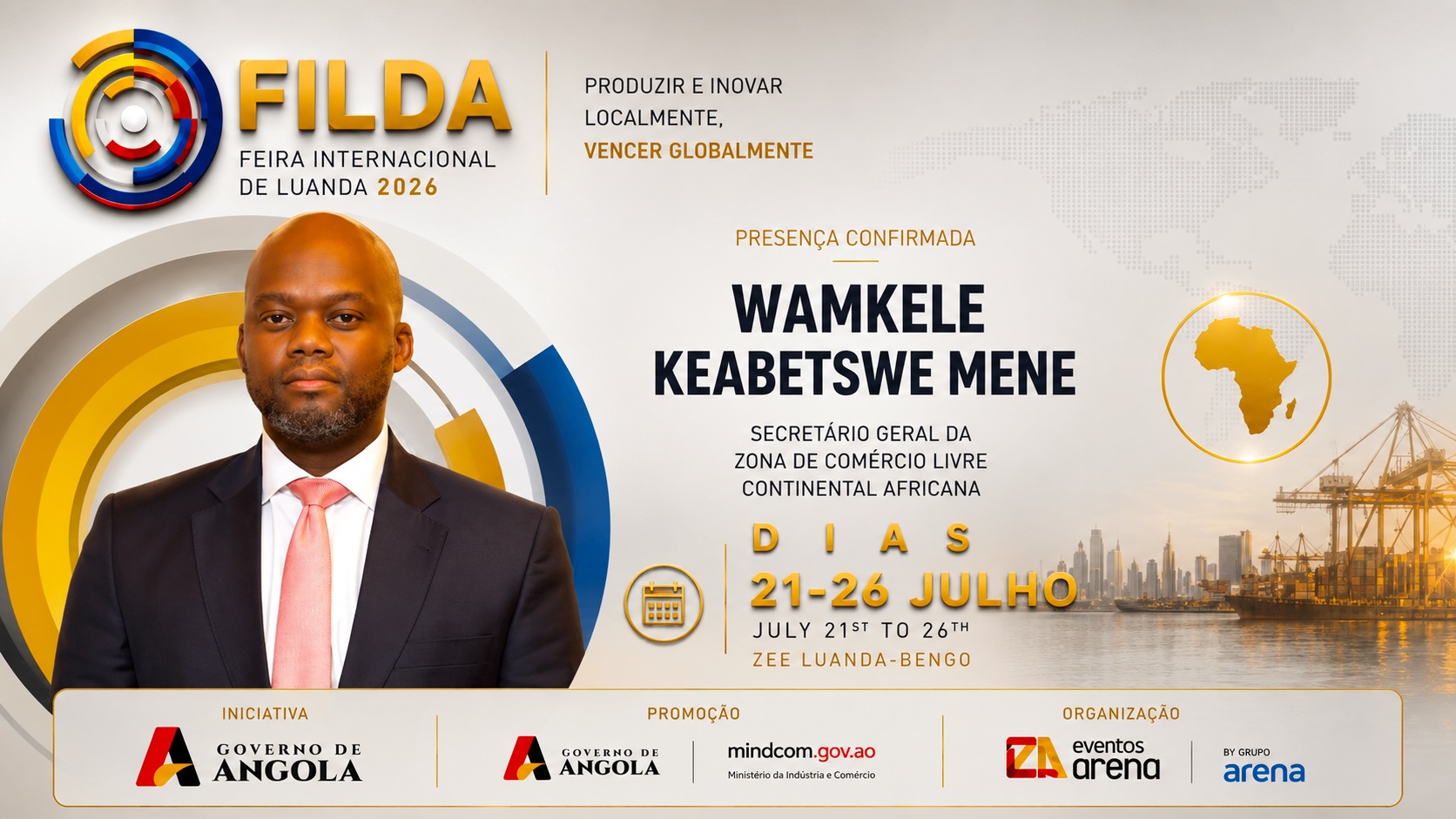
ACCRA — The Secretary-General of the African Continental Free Trade Area (AfCFTA) Secretariat, H.E. Wamkele Mene, will take part in the 41st edition of the Feira Internacional de Luanda (FILDA 2026), in Angola, as a confirmed guest.
WHAT: 41st Feira Internacional de Luanda (FILDA 2026), Angola’s largest international trade fair, held under the theme “Produzir e Inovar Localmente, Vencer Globalmente” (Produce and innovate locally, win globally).
WHO: H.E. Wamkele Mene, Secretary-General, AfCFTA Secretariat.
WHEN: 21–26 July 2026.
WHERE: Zona Económica Especial (ZEE) Luanda-Bengo, Ícolo e Bengo, Angola.
FORMAT: The Secretary-General is expected to address participants and to engage with exhibitors and the private sector during the fair.
Why it matters: FILDA showcases what African enterprises now produce; the AfCFTA is the framework that allows those goods to move and be sold across African borders. The Secretary-General’s participation places the continental market at the centre of a national industrial moment — days after Angola validated its national AfCFTA implementation strategy in Luanda.
For the media: Interviews with the Secretary-General may be arranged, subject to availability. Accredited media wishing to cover his participation or to request an interview should contact the AfCFTA Communications Division at the details below.
— ENDS —
About the AfCFTA
The African Continental Free Trade Area is a flagship project of Agenda 2063: The Africa We Want. It entered into force on 30 May 2019, started trading on 1 January 2021, and brings together a market of 1.4 billion people with a combined GDP of USD 3.4 trillion — with the potential to raise intra-African trade substantially through tariff liberalisation and trade facilitation.
Media contact
Alexandre Siewe · Senior Advisor, Communications — AfCFTA Secretariat
Email: Alexandre.Siewe@au-afcfta.org · WhatsApp (on-site, FILDA): +237 679 503 779 · Web: au-afcfta.org
The Luanda event and why it matters
Context for editors
The Feira Internacional de Luanda (FILDA) is Angola’s flagship international trade fair. Organised under the Ministry of Industry and Commerce (MINDCOM), its 41st edition runs from 21 to 26 July 2026 at the Zona Económica Especial (ZEE) Luanda-Bengo, under the theme “Produce and innovate locally, win globally.” The fair has become a showcase for goods designed, processed and finished in Angola — a visible marker of the country’s effort to broaden its economy beyond commodity exports.
Official WEBSITE : www.filda-angola.co.ao
SOCIAL MEDIA: facebook.com/filda.oficial – instagram.com/filda.oficial
The Secretary-General’s participation connects that national effort to the continental market. FILDA demonstrates the capacity of African enterprises to produce; the AfCFTA provides the framework through which what they produce can move, and be sold, across African borders. Local production is the foundation; continental market access is the purpose. A competitive African factory reaches its full potential only when it can sell into a market larger than its own borders — a market the AfCFTA brings together of 1.4 billion people, with a combined GDP of USD 3.4 trillion.
The timing is significant. Only days before the fair, and in the same city, Angola validated its National AfCFTA Implementation Strategy and Action Plan — led by MINDCOM, with technical support from the UN Economic Commission for Africa and financing from Global Affairs Canada — with a focus on raising the participation of Angolan enterprises in African markets, building regional value chains, and ensuring that women and young entrepreneurs take part in the transformation. The same ministry that organises FILDA is operationalising the AfCFTA nationally.
The AfCFTA is a flagship project of the African Union’s Agenda 2063 and establishes the largest free trade area in the world by number of participating countries. Its promise is understood clearly: intra-African trade remains a modest share of the continent’s total commerce, constrained by infrastructure gaps, high logistics costs, limited access to finance and regulatory barriers. Progress depends on turning the legal foundation of the single market into practical, everyday market access for the enterprises — above all the small and medium-sized enterprises — that are its true engine. Luanda is one scene in that work.